By CWARF Team · March 13, 2026 · 2,100 words · 10 min read
Most productivity advice was written by people with suspiciously clean desks and no dependants. This guide is for everyone else — the people with chaotic schedules, wandering attention spans, and to-do lists longer than their will to live. Real systems, real strategies, and zero 5am wake-up calls required.
If you have ever downloaded a productivity app, felt a brief surge of optimism, set it up beautifully, used it for four days, and then quietly never opened it again — welcome. You are in the majority. The productivity industry is enormous and largely built on the premise that the right system will transform you into a version of yourself who somehow gets everything done, has time to read 52 books a year, and still makes it to the gym. This is, to put it charitably, unrealistic for most people.
Real productivity in 2026 is not about doing more. It is about doing the right things with the limited cognitive bandwidth you actually have, on the actual days you actually live, with the actual interruptions and energy fluctuations that are a normal part of being a person. This guide gives you a system built for real human brains — not the mythological productivity robot featured in most self-help content.
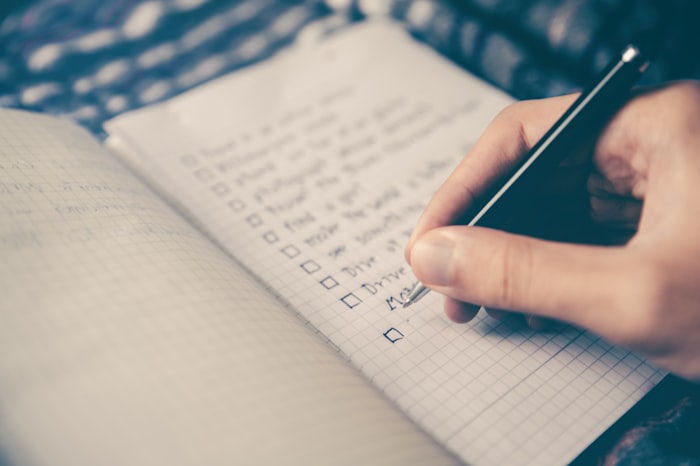
Productivity doesn't require a perfect morning routine. It requires a realistic system you'll actually use.
Why Every Productivity System You've Tried Has Failed You
Before we build something better, let's briefly honour the graveyard of failed systems most of us are carrying around. The Pomodoro technique you used for eleven days. The bullet journal that lasted until you missed one day and felt too guilty to continue. The elaborate colour-coded Google Calendar that collapsed the moment real life didn't cooperate with your colour coding.
These systems didn't fail because you lack discipline. They failed because they were built for consistency, not resilience. Rigid systems break the moment life interrupts them — and life interrupts constantly. A good productivity system doesn't require perfect conditions to function. It works on the bad days too, even if it works differently.
The Three Foundations of a Productivity System That Survives Real Life
Foundation 1: Capture Everything Outside Your Head
Your brain is an extraordinary organ for having ideas and a terrible one for storing them reliably. Every task, commitment, idea, or "I must remember to" that lives in your head is occupying cognitive space that could be used for actual thinking. The first step in any functional productivity system is a single, trusted place to capture everything — a notebook, an app, a voice memo, it doesn't matter, as long as it's one place you habitually use.
The rule is simple: if it's in your head, it's not yet managed. Capture it. Until a task or idea is written down somewhere you trust, your brain will keep reminding you about it at inconvenient moments, fragmenting your attention across everything you haven't dealt with yet.
Foundation 2: Prioritise by Energy, Not Just Importance
Traditional productivity advice prioritises by importance: do the most important thing first. This is correct in theory and often useless in practice, because importance is not the only variable. Energy is the other variable, and it fluctuates significantly across the day, the week, and depending on factors entirely outside your control.
A more useful prioritisation model matches task type to energy state. High-cognitive-demand work — creative output, strategic thinking, complex problem-solving — belongs in your peak energy window. Admin, emails, routine tasks, and meetings belong in your low-energy windows. The same eight hours of your day can produce radically different outputs depending on whether you're matching task to energy or just doing whatever's at the top of the list.
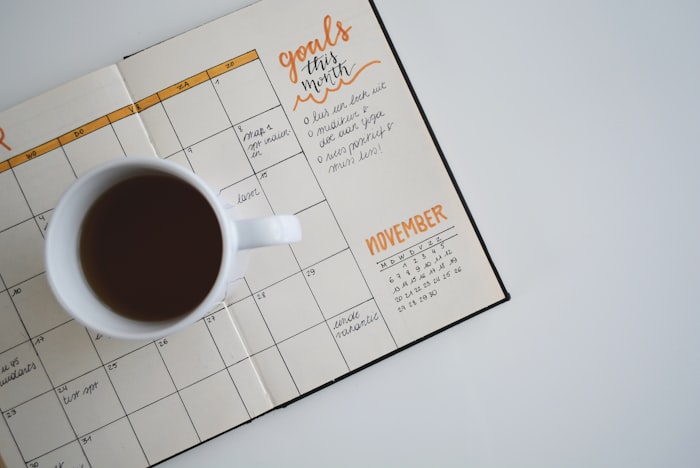
Matching the right task to the right energy level is the productivity upgrade most people never try.
Foundation 3: Weekly Review, Not Daily Perfection
The pursuit of perfect daily execution is the fastest route to abandoning your system entirely. Missed a task? The day is ruined. Behind on the week? The system has failed. This all-or-nothing relationship with productivity is emotionally exhausting and counterproductive.
Replace daily perfection with a weekly review. Once a week — Friday afternoon or Sunday evening are popular choices — spend 20 minutes reviewing what got done, what didn't, what carried over, and what the coming week needs from you. This single habit resets your system every week regardless of how badly the previous week went. Nothing derails permanently when you have a weekly reset built in.
The Practical Daily System: Simple Enough to Actually Use
Here is the daily structure that works without requiring monk-level discipline or a home office that looks like an IKEA showroom:
- Each morning, identify your ONE non-negotiable task — the single thing that, if you accomplish nothing else, makes the day a success. Everything else is a bonus. This prevents the paralysis of staring at 27 tasks and doing none of them.
- Time-block two or three focused work sessions — 60 to 90 minutes each, with clear start times and a specific task assigned to each block. Not "work on project" but "write the first section of the client report."
- Batch your reactive work — emails, Slack messages, and admin should happen at set times rather than as a constant background interrupt. Every time you check email reactively, you're fragmenting your attention for the next 20 minutes, whether you realise it or not.
- End each day with a two-minute shutdown — note what you completed, move unfinished tasks to tomorrow deliberately, and mentally close the day. Without a shutdown ritual, work bleeds into everything else and you never fully recover.
"The goal is not to empty your to-do list. The goal is to make meaningful progress on the things that actually matter — consistently, sustainably, without burning out by Thursday."
How AI Tools Are Changing Productivity in 2026
One of the most underused productivity upgrades available right now is AI-assisted task management and content production. For freelancers, small business owners, and solopreneurs managing multiple responsibilities simultaneously, AI tools can eliminate enormous amounts of the low-value work that eats up the day without adding meaningful output.
AI can draft first versions of documents, emails, and reports that you then edit rather than create from scratch. It can summarise long documents. It can generate options, outlines, and frameworks that would take you an hour to produce manually in five minutes. The cognitive relief of not having to start from a blank page on every task is genuinely significant — and the time savings compound across the week.
🤖 Want AI prompts specifically built for productivity and business task management? Our AI Prompt Mega Pack includes 100+ prompts covering business operations, content creation, financial management, and daily productivity — built for people who want AI to actually help, not just generate generic text.
The Productivity Traps That Eat Your Day Silently
- Pseudo-productivity — organising your desk, colour-coding your calendar, and setting up new apps are not work. They feel like work. They are not work.
- Perfectionism as procrastination — the report that isn't sent because it's "not quite right yet" is less useful than the imperfect version that actually gets delivered
- Context switching — jumping between completely different types of tasks throughout the day is one of the most expensive things you can do with your cognitive energy. Batch similar work together wherever possible.
- The 40-item to-do list — a to-do list longer than 10 items is not a plan, it's a source of anxiety. Ruthlessly pare it down to what genuinely matters today.
- Confusing busyness with progress — full calendars and long hours are not inherently productive. Output is what matters. What did you actually ship, decide, or move forward today?
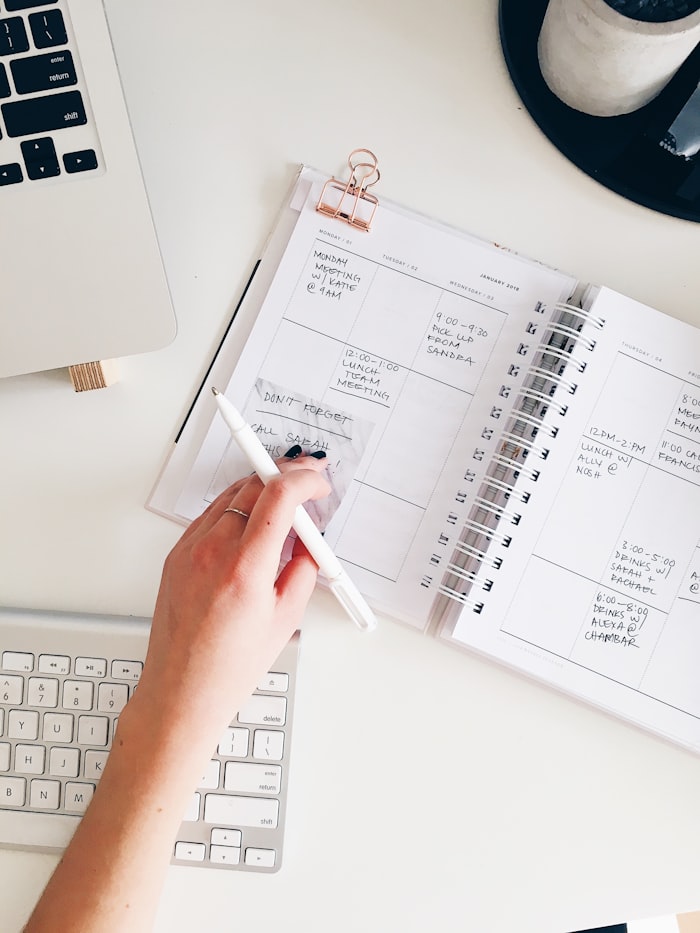
Busyness and productivity are not the same thing. One fills your day. The other fills your bank account and advances your goals.
The Self-Mastery Connection: Productivity Is a Skill, Not a Personality Trait
One of the most damaging beliefs in the productivity space is that some people are naturally organised and disciplined, and others simply aren't. This is not true. Productivity is a skill — which means it can be learned, practised, and deliberately improved. The people who appear effortlessly productive have usually spent years building systems, habits, and environmental conditions that make productive behaviour the default rather than the exception.
Self-mastery — the ability to manage your attention, energy, and behaviour in alignment with your actual goals — is the foundation that makes every productivity system work better. Without it, systems are just scaffolding around the same underlying chaos. With it, even a simple system produces extraordinary results over time.
📘 Ready to go deeper on self-mastery and building habits that stick? Our Atomic Self-Mastery guide covers the exact mindset and behavioural frameworks behind sustainable high performance — without the toxic hustle culture that makes most self-improvement content unbearable.
Further Reading on CWARF
- 📌 How to Use AI Prompts for Productivity When Your To-Do List Is Longer Than Your Will to Live
- 📌 The Self-Mastery Guide for People Who Are Tired of Starting Over Every Single Monday
- 📌 Why Your New Year's Resolutions Fail by February and How to Build Habits That Actually Stick
- 📌 How to Use AI Prompts to Run Your Small Business Without Losing Your Mind
Build the Productivity System Your Brain Will Actually Use
Stop downloading apps you'll never open. Start with a system built for real life — and the tools to make AI do the heavy lifting so your energy goes where it actually matters.